


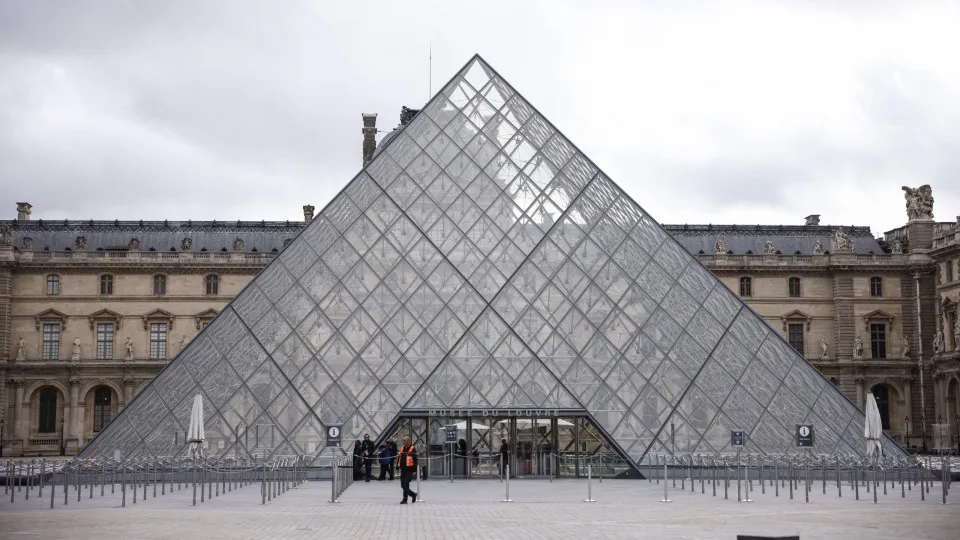
A renewable strike was announced at the world’s most visited French museum following a unanimous vote in a general assembly proposed by the CFDT, General Confederation of Labour (CGT), and Sud unions.
The aim of the strike is to protest “working conditions” and “lack of resources.” The robbery of France’s crown jewels in October has also been cited as a reason for the strike.
The announcement came a day after it became known that several hundred old books suffered damage from a flood caused by pipe failures in the library of antiquities, whose state of deterioration was known.
Following turbulent times after the crown jewels’ theft on November 17, the Louvre also closed an office area and an Egyptian antiquities gallery due to structural fragility in some beams and flooding that damaged several hundred works in the Egyptian Antiquities library.
“Every day, museological areas are closed beyond the planned guaranteed opening times due to staff shortages and technical failures, as well as building deterioration,” unions explained in a letter to French Culture Minister Rachida Dati.
On October 19, the Louvre was hit by a “spectacular robbery” during the day when a group of four used a movable elevator from the Seine to steal eight 19th-century jewels valued at 88 million euros, including the tiara of Empress Eugénie adorned with about 2,000 diamonds.
The four individuals involved in the robbery have been detained, but the jewels and moral perpetrators remain missing.
At the end of November, the museum announced a 45% increase in ticket prices for visitors from non-European countries starting in 2026 to finance modernization.
However, “the public now faces limited access to works and reduced mobility.” “Visiting the Louvre has become a real obstacle course,” unions noted.
“Various internal warnings have gone unanswered, and the statements provided to national representation and media by the Louvre’s management do not indicate an awareness appropriate to the crisis we are experiencing,” union organizations emphasized.
Therefore, they request negotiations directly with the Ministry of Culture, given “the unprecedented degradation of the internal social climate and the need for answers from the competent authorities.”
In 2024, the Louvre hosted 8.7 million visitors, with 69% being foreigners.