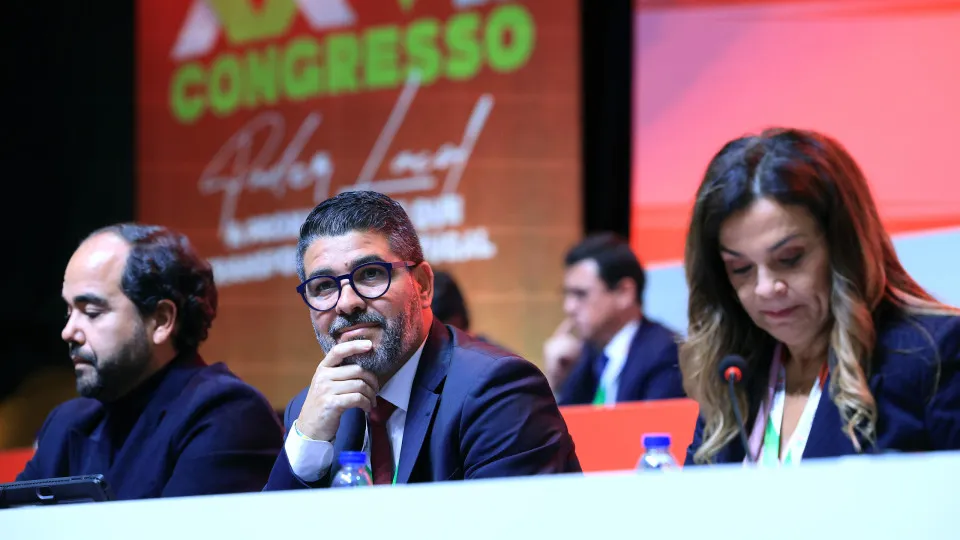


“The remuneration of mayors is not adequate to reality. A president or a councilor earns peanuts. Sometimes we invite people to join the candidate lists [for the municipalities] and they have no interest because the legislation does not reward those who work 24 hours a day, every day of the week,” stated Macário Correia during the XXVII Congress of the ANMP, which concludes today in Viana do Castelo.
Calling for a review of the law for local elected officials, the former president of the Faro Câmara pointed out the issue of “miserable salaries and someone needs to address this problem.”
The president of the Faro Municipal Assembly also emphasized the need for changes in local government financing, which he deems unfair.
“We could one day be accused of emptying half of the country. There’s a different pace between the regions from Chaves to Faro inland and the coastal areas. This situation has worsened alarmingly in recent years,” he warned.
For the social-democrat, “without positive discrimination in the Local Finance Law, the situation will worsen” and local officials could “be accused of being complicit in a situation that deteriorates half of the country.”
“This is a mission we must pursue,” he asserted.
Regarding the municipal electoral law, Macário Correia believes there are “two overlapping parliaments, the Câmara and the AM.”
“Currently, a quarter of mayors lack a majority. Legislation must ensure that those elected can govern. [Currently] those elected lack the working conditions. Legislation needs to be clear and explicit so those elected can govern,” he emphasized.
For the social-democrat, this “needs to be clearly and objectively stated in the law.”
“The candidate winning the most votes for the Câmara becomes its president. The president of the AM may not be the most voted. This is incorrect. We are deceiving the people,” he criticized.
Macário Correia noted that “after municipal elections, core principles are negotiated,” contributing to “the deterioration of the reputation of local officials and politicians,” as well as questioning the ethics of those who hold public office.
“People are bought and sold as they switch parties. They depart from the list that elected them, selling themselves for some minor gain. This does not dignify the political class,” he argued.
For the president of the Faro Municipal Assembly, “there needs to be dignity in the exercise of local power,” and to achieve this, there is a need for a “profound review of the legislation.”