
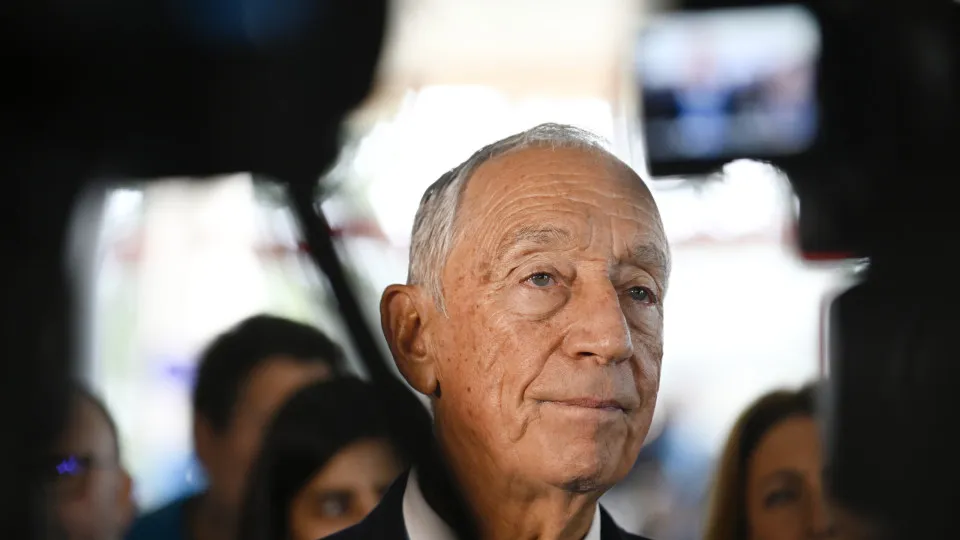
Marcelo Rebelo de Sousa delivered a speech during a session commemorating November 25, 1975, marking the 50th anniversary of this date. He referenced the Bruges Charter written by Infante D. Pedro about 600 years ago, emphasizing the idea of “temperance as a national virtue.”
“This is all related to November 25. Temperance, which encompasses balance, wisdom, moderation, and significantly, unity in essentials, was perhaps more apparent on November 25 than in many moments during the revolution,” he asserted.
The head of state remarked, “Between the risk of violence and temperance, it was temperance that prevailed on November 25,” and afterward, discussions ensued about who gained more, who lost more, but “the nation certainly won.”
“There was no return to the past defeated in April 1974. However, there was also no immediate construction of a perpetual revolutionary future, with a delay in the Constitution and its significance in the start of the democracy in which we live,” he continued.
Marcelo Rebelo de Sousa reiterated that “temperance at that moment prevailed” and concluded his final speech as President in the Assembly by appealing for this virtue and unity in essential matters.
“United in essentials and with temperance, we will be eternal. Long live November 25, long live April 25, long live freedom, long live democracy, long live Portugal,” he proclaimed.
Addressing the question “what does this ancient charter have to do with November 25,” the President responded that “many of the problems of then are still those of half a century ago” and remarked, “Knowing history isn’t everything, but in a nation with almost 900 years, it helps us all dream.”
At the beginning of his approximately fifteen-minute intervention, the head of state acknowledged the presence of former President António Ramalho Eanes and expressed regret over the general’s refusal of promotion to marshal.
Marcelo Rebelo de Sousa attributed this to “the humility of President António Ramalho Eanes” and described it as “a sorrow that the history of Portuguese democracy will never explain.”
“It is a matter of political justice, a matter that naturally depends on the individual’s will, but nationally it is perfectly explainable,” he considered.
In a session held for the second consecutive year, in a format similar to April 25, the President again framed November 25 as a “decisive date at the end of the revolution, in the drafting of the Constitution, and in paving the way for the expression of popular sovereignty.”
“And that’s why I find it fair that in my last speech in the Assembly, the topic can only be one: the Portuguese and Portugal,” he added.
Midway through his speech focused on Portugal’s history, in which he praised the “capacity to integrate elements from various cultures,” Marcelo Rebelo de Sousa referenced his recent attendance at the 50th independence anniversary celebrations of Angola, which was criticized by Chega’s leader André Ventura.
“I recalled just eight days ago, upon leaving a celebration of the 50th anniversary of independence of a brother state, the pride of having unified that very different nation, as we unified others like Brazil. This achievement owed to our centuries-old presence in those territories,” the head of state noted.
The President described Portugal as “a multicultural country, a nation open to the world and highly esteemed globally.”
The events of November 25, where opposing military forces clashed, and the so-called moderate wing of the Armed Forces Movement (MFA) won, marked the end of the so-called Ongoing Revolutionary Process (PREC).
[Updated at 2:27 PM]