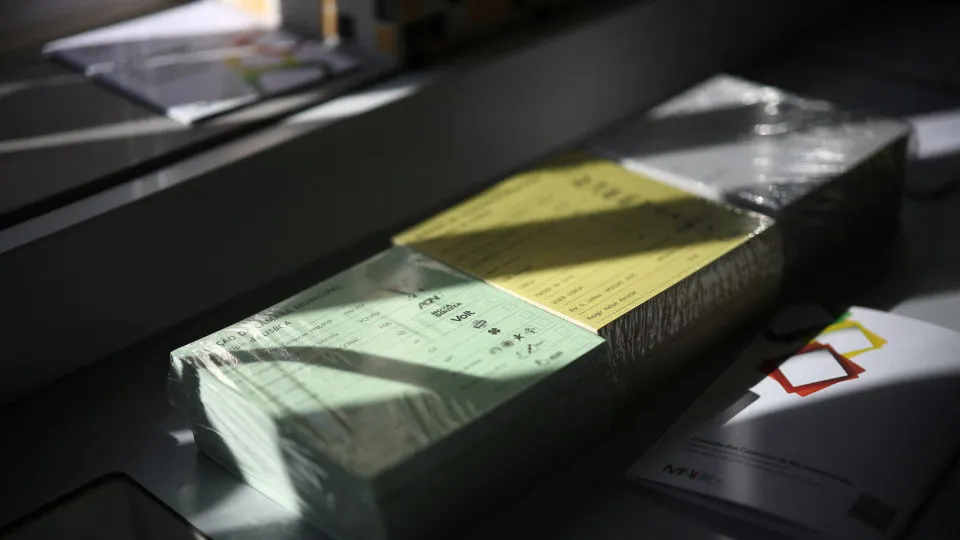
The PSD strengthened its position on October 12, reclaiming its status as “the largest party in local power,” with an increase in votes, mandates, and presidents of parishes and municipalities. This success allows the PSD to lead the National Association of Portuguese Municipalities (ANMP), a position it lost in 2013, and the National Association of Parishes (Anafre).
The party, having achieved recent victories in local elections in 2001, 2005, and 2009 while in opposition in the parliament, continues to be the leading local political force. Currently, it governs the country, holds more seats in the Assembly of the Republic, and leads the Regional Governments in Madeira and the Azores.
In coalition and independently, the PSD won in 136 municipalities, with an absolute majority in 109, compared to the PS’s 128 wins (101 with an absolute majority). In 2021, it secured 114 wins against the socialists’ 149.
The social democrats lost some district capitals compared to four years ago (now leading in seven compared to nine in 2021), and no longer control the bastions of Bragança and Viseu, as well as regions like Coimbra and Faro. However, they gained Beja for the first time, reclaimed Porto, and retained Aveiro, Braga, Lisbon, Portalegre, and Santarém.
The PS, besides losing the leadership of the ANMP and Anafre, again fell short of conquering Lisbon and Porto. However, it remained a significant distance ahead of other parties and managed to seize district capitals from the PSD, such as Faro, Coimbra, Bragança, and Viseu, in addition to capturing Évora from the CDU (PCP/PEV).
The elections marked the worst result ever for the CDU, which dropped from 19 councils in 2021 to 12 and lost the district capitals of Évora and Setúbal, albeit regaining Montemor-o-Novo, Mora, Sines, and Aljustrel.
The CDS maintained its six councils, additionally gaining the presidency of Mêda (district of Guarda) through a list with the PSD.
The Chega party, contesting its second local elections with limited local presence, did not achieve its leader André Ventura’s goal of winning in about 30 municipalities.
In these elections, characterized by dynamics distinct from legislative contests, more focused on local figures and notoriety, Chega only won in São Vicente (Madeira), Albufeira (Algarve), and Entroncamento (district of Santarém), none with an absolute majority, potentially testing its governance capabilities over the next four years.
Citizen groups won the presidency of 20 councils, one more than in 2021, including the communist stronghold of Setúbal.
The Nós, Cidadãos! party won again in municipalities: Belmonte, taken from the PS, and Guarda, where the same president was elected under this party (previously elected in 2021 by an independent movement).
Coalitions involving the PSD, CDS-PP, and other parties led in six (Lisbon, Sintra, Gaia, Porto, Braga, and Cascais) of the ten most populous areas, while the PS triumphed in the remaining four (Loures, Almada, Amadora, and Matosinhos).
Forty-eight women were elected as council presidents, nearly doubling the previous local elections’ count, yet still below the parity threshold set by law, with the exception of the Azores.
Seventy of the 308 councils changed party control, while seven switched parties for the first time since the initial local elections. In 17 Portuguese municipalities, the governing executive force remains unchanged.
Chega increased votes in the 12 municipalities with the highest number of foreign residents, nine of which are in the Lisbon Metropolitan Area, while the CDU lost voters in these same areas compared to 2021.
During these local elections, 135 unions formally disbanded to restore 302 parishes consolidated by the 2012 administrative reform.
Following months where dissolution committees managed the distribution of assets, workers, rights, and responsibilities among the separating parishes, installer commissions are currently ensuring the operation of these local authorities.