
Just over a month before the presidential elections, José Adelino Maltez highlights that, unlike most presidential races in the history of Portuguese democracy where the outcome was relatively predictable, this time the candidates are “very fragmented” and, according to polls, none currently go beyond about 20% of the vote intention.
“This is a signal that [the next President of the Republic] will have an enormous challenge: to garner more support and be more consensual after being elected, and this is the main challenge for us to have a President of the Republic like we’ve had, which is a President who reflects a space of almost acclamatory political community,” he said.
Adelino Maltez emphasizes that the main challenge for the next President is to move from a “secondary vote” to “the most prestigious figure of the institutions,” but stresses “that nothing is impossible in Portuguese democracy,” which has “managed to transform people who were overly criticized by the community into a solution of consented authority.”
“The Portuguese community is stronger than it appears, and don’t be under the illusion that, in a pluralistic and highly competitive democracy dispute, this fragmentation of the confrontation later prevents rise. On the contrary, I think it will go well,” he states.
Asked whether the past affiliation to political parties might be a disadvantage in achieving a broader consensus, Adelino Maltez said that it “has never been a ‘handicap’ for all other Presidents of the Republic,” stating that even António Ramalho Eanes, at the end of his term, “almost announced that he would register in a party or found a party.”
Politologist António Costa Pinto, meanwhile, considers it doesn’t make sense to outline the characteristics necessary for the President of the Republic in the next five years, stressing that the presidency is a “unipersonal body,” whose style depends exclusively on the personality chosen by the Portuguese to occupy the position.
Referring that, if the next President follows the model of previous heads of state like Marcelo Rebelo de Sousa or Jorge Sampaio, his main challenge will be to be a “guarantor of the Constitution,” Costa Pinto says that attributing characteristics like “consensus builder” only makes sense in a “discursive and electoral dynamic.”
“What was the consensus that President Marcelo Rebelo de Sousa, beyond the speech, made between left and right?” he exemplifies, a point with which Adelino Maltez agrees, who considers the idea of presenting as a “bridge builder” to be purely “an electoral campaign argument.”
However, emphasizing that, in Portugal, the head of state has “a great latitude of action,” António Costa Pinto envisions a scenario he sees as challenging not for the next President of the Republic, but for the Portuguese semi-presidential regime.
“Imagine a radical right-wing political leader being elected President. There is a wide informal power of the President. For example, nothing written in the Constitution requires presidents to surrender their party cards, nothing obliges them to do so,” he noted.
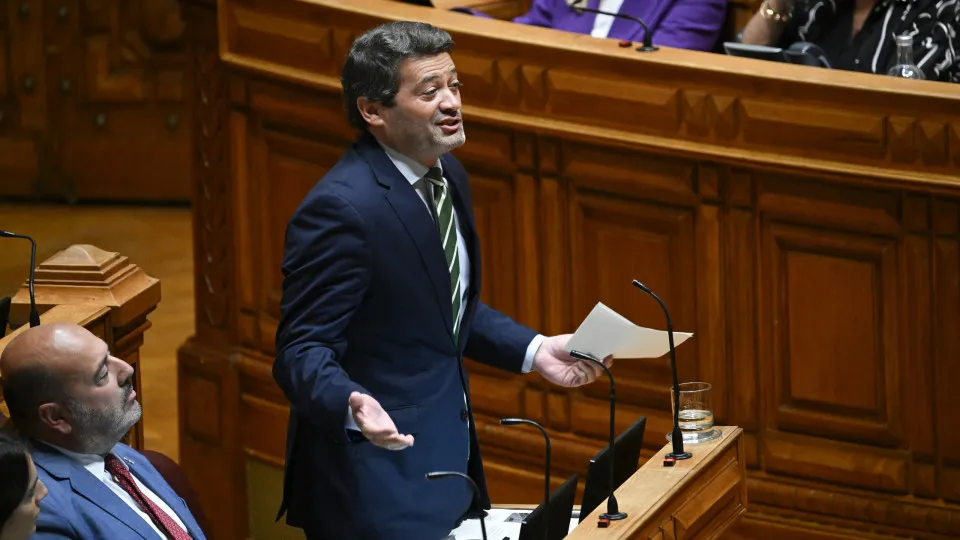
Alluding to André Ventura, the political scientist warned that “if Portugal one day has a President of the Republic who simultaneously is the leader of a dominantly electoral party, they have ample capacity to alter the nature” of the Portuguese regime.
“This is not dramatic or a threat. It is merely to say that Portugal is far from having experienced all the dimensions of the semi-presidential regime,” he warns.