
In a plenary debate at the Assembly of the Republic, scheduled by the communist bench, resolutions by PCP, Livre, BE, and PAN on increasing the national minimum wage by 2026 were discussed. The PSD also raised an initiative regarding the evolution of the guaranteed minimum monthly remuneration and the enhancement of the average wage.
Opening the discussion, PCP’s secretary-general, Paulo Raimundo, criticized those who support wage increases but not at the present time, arguing that workers receive “an increasingly smaller share” of the wealth they create, and labeled the Prime Minister’s mention of a 1,600-euro minimum wage as a “maneuver” and “demagogy bordering on insult.”
“We already knew there would be maneuvers on the eve of the general strike, but this is not a maneuver, this is desperation and is truly mocking those who work,” the communist deputy asserted.
In response, PSD deputy Sónia Fernandes condemned the communists for insisting on a minimum wage hike “completely contrary to the 2025-2028 tripartite agreement on wage appreciation,” which foresees a progressive increase, and “completely ignoring indicators such as productivity, corporate tax burden and profound differences between sectors and regions,” adding that these factors are crucial in determining if the country can afford higher wages.
BE’s sole deputy, Mariana Mortágua, presented the party’s proposal recommending that the minimum wage be raised to 1,020 euros in 2026, arguing that a quarter of Portuguese people earn the minimum wage, a value insufficient to “cover rent,” and accused Luís Montenegro of “not caring” and of raising wage goals for fear of the strike.
Regarding the PSD proposal, deputy Paulo Edson Cunha expressed disbelief at the scheduled general strike in light of the country’s economic situation, stating that social democrats want the dialogue at the social concertation to progress towards a gradual rise in both minimum and average wages.
From the PS, deputy Hugo Oliveira stated that socialists have a track record on minimum wage, whereas the PSD has a record. Despite not taking a stance on the proposals under discussion, he joined in the criticism accusing the Government of fearing the impact of the general strike.
Patrícia Gonçalves of Livre stated that reaching the 1,600-euro minimum wage mentioned by the Prime Minister will not be possible through the changes in the law proposed in the new labor package, which she said “relies on an economy based on cheap and precarious labor.”
From PAN, Inês de Sousa Real argued that “in Portugal, the month grows longer for an ever-shorter wage,” and that The Economist’s recognition “is not felt in people’s lives,” with Filipe Sousa from JPP calling for more wage dignity and justice for workers.
From the right, Daniel Teixeira of Chega acknowledged that the minimum wage in Portugal is low, but criticized both PSDs for wanting to “maintain an economic model that eternally ties Portugal to the bottom of Europe,” while supporting a higher minimum wage, rejecting “systematically the conditions that would allow this increase.”
IL’s president, Mariana Leitão, criticized the “usual auction of the national minimum wage” in parliament, “when the focus should be on productivity, investment, and economic growth,” while Paulo Núncio of CDS-PP accused the left of “living in the illusion that all problems are solved by raising the minimum wage.”
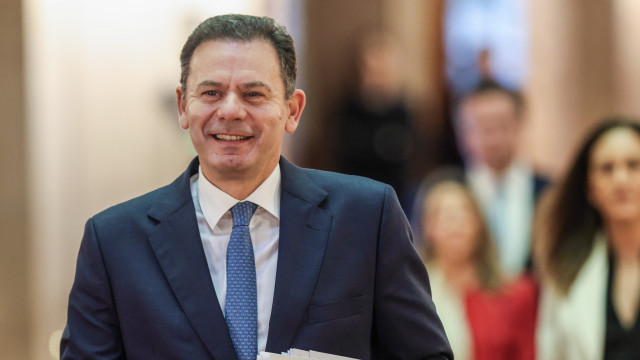
Prime Minister Luís Montenegro stated today that the goal of reaching a national minimum wage of 1,600 euros is realistic and will be scheduled “when there are foundations for it.”
Lusa | 12:25 – 10/12/2025