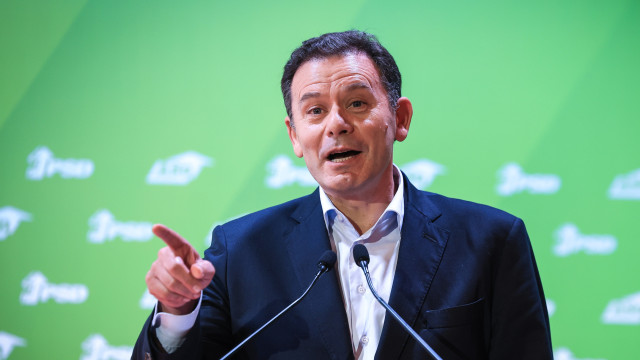

“There’s an entire relationship we want to nurture between two civilizations that have known each other for 500 years, being very far from each other in the world but mutually appreciative. So, we thought it was really important to be present and represented this time — we weren’t in Dubai [in 2021 and 2022]. We were very pleased to be invited, and I sought to create a more or less consensual program with the city’s cultural agents,” said Porto’s mayor, Rui Moreira, to Lusa.
The program in question is multidisciplinary, taking place from April 18 to 21, featuring “the piano of António Pinho Vargas and the cinematography of Mariana Vilanova,” also crossing “the music of Alexandre Soares with traditional Japanese ‘haikus,’ through the words of José Tolentino de Mendonça and Gonçalo M. Tavares,” according to the Porto City Hall.
The film ‘Na Faina do Argaço’ will also be screened, “where, invited by the Batalha Centro de Cinema, Mariana Vilanova explores the connections between ancient rituals — like the harvesting of seaweed, valued for its therapeutic and fertilizing properties — and new technological developments,” which Rui Moreira believes will pique the curiosity of the Japanese audience.
This programming is the result of collaboration between the municipality, Batalha Centro de Cinema, and the Coliseu do Porto Ageas.
“A fundamental name in Portuguese classical music,” António Pinho Vargas will perform on April 20 “with an intimate concert that includes some of the most important compositions of his career,” while the late afternoons at the Portugal Pavilion from April 18 to 21 will feature a performance by Alexandre Soares, co-founder of GNR and Três Tristes Tigres.
The musician “reveals four performative, unreleased works inspired by four haikus by Matsuo Bashô, Masaoka Shiki, José Tolentino de Mendonça, and Gonçalo M. Tavares,” each accompanied by interpretations of both texts and authors, “in a primordial meeting between words, sound, and a non-metric dialogue, approach, and understanding between two cultures.”
“We ended up with a program that seems quite interesting, especially, first, by recalling the exhibition’s theme, related to the sea, and then the links we share with Japan and the interrelations we’ve had with Japanese culture over the centuries,” noted Porto’s mayor, Rui Moreira.
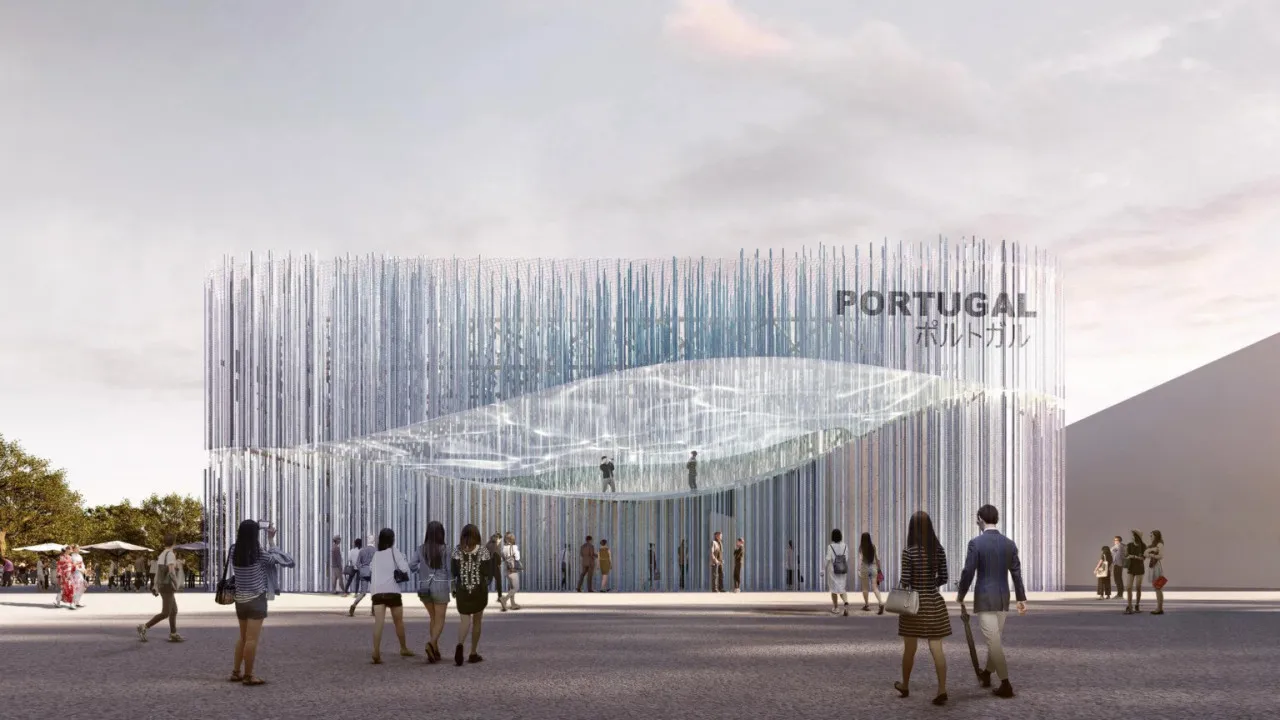
The mayor emphasized that “Porto has been carefully nurturing this relationship with Japan,” noting “a fortunate coincidence: thanks to a good decision by Portugal’s government under António Costa, the Portugal Pavilion was entrusted to Kengo Kuma,” the architect “who is working on the Matadouro” in the parish of Campanhã, to be converted into a cultural, leisure, and office center with capacity for over 2,300 people, named M-ODU.
Rui Moreira also recalled recent interactions between the current municipal executive and the Japanese city of Nagasaki, which has been twinned with Porto since the 1970s.
Expo 2025 Osaka, scheduled from April 13 to October 13, expects over 28 million visitors and involves 161 participating countries, all united in discussing innovative solutions to global challenges.
Under the theme ‘Ocean, Blue Dialogue,’ Portugal’s participation in Expo Osaka 2025, led by Joana Gomes Cardoso as the commissioner-general, aims to emphasize the importance of marine sustainability and ocean preservation, aligning with global commitments to combat climate change and protect ecosystems.