

Portugal has been named the “Economy of the Year” for 2025 by the British magazine “The Economist,” which analyzed data from the 36 wealthiest countries in the world. Spain, the previous year’s winner, fell to fourth place.
The list was compiled using data from five economic indicators: inflation, inflation deviation, Gross Domestic Product (GDP), employment, and stock market performance.
“In 2025, [Portugal] managed to combine strong GDP growth, low inflation, and a booming stock market,” the magazine reported.
The boost in Portugal’s GDP and employment is attributed to tourism, during a period when “many wealthy foreigners are moving to the country to take advantage of low tax rates,” according to “The Economist.”
What are the reactions to this distinction? “Just recognition of merit,” says Montenegro
In a post on social media X, Prime Minister Luís Montenegro stated on Sunday that “the distinction by ‘The Economist’ that named Portugal as the ‘Economy of the Year’ is a just recognition of the merit and work of the Portuguese people and reinforces the government’s motivation to continue on the path that has brought us here in recent months.”
“By reforming with courage and making the country more competitive and productive, we will continue to create jobs, increase wages, and strengthen the welfare state. This will provide more well-being and a better future for the Portuguese,” the Prime Minister wrote.
É com esperança e confiança que vemos um reconhecimento internacional excepcional de Portugal. A distinção pela revista “The Economist” de que a “economia do ano” foi a portuguesa é uma justa aclamação do mérito e do trabalho dos portugueses e reforça a motivação do Governo em…
— Luís Montenegro (@LMontenegro_PT) December 7, 2025
Meanwhile, the Minister of Economy and Territorial Cohesion attributed Portugal’s selection as “Economy of the Year” by “The Economist” to the “work of the Portuguese.” However, he admitted that Portugal hasn’t moved from “poor to rich.”
Manuel Castro Almeida acknowledged in an interview on Monday to SIC Notícias that despite this “very good news,” “at home” people may not understand how Portugal can be chosen as the “Economy of the Year”: “People at home might say, ‘So, we’re in first place and doing so well, but I don’t feel it in my life?'”
He explained: “What The Economist says is that Portugal in 2025 made a bigger leap than others, but we started from far behind.” Portugal, he continued, didn’t move from “poor to rich.” “We moved from very poor to a little less poor. We made the biggest leap of all, but we continue to be a country with great inequalities.”
“Structural problems” and “excellent news.” Presidential candidates divided
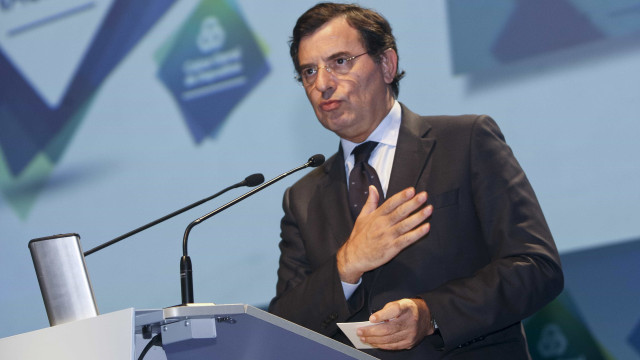
Henrique Gouveia e Melo commented on this matter as well, stating on Monday that the Portuguese economy “has structural problems” due to having almost 20% of the GDP reliant on tourism. “If there is an international crisis affecting tourism, we will enter a deep crisis. Therefore, we need industries in this kind of activity,” he said.

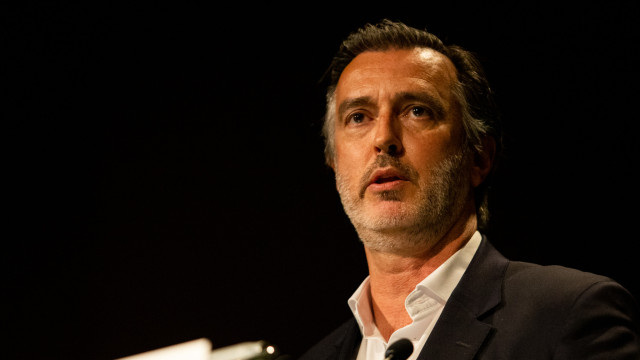
On the other hand, João Cotrim Figueiredo, speaking a day after the British magazine “The Economist” distinguished Portugal, argued that the country needs greater ambition and a more open attitude toward change.
“I won’t say it’s not pleasant. But I look beyond the headlines. I checked exactly how the ranking was made. We still have 10 to 11 countries ahead of us in terms of economic growth. We are, in fact, comparing ourselves with a group of European countries all relatively apathetic. And the exceptions are countries recovering from a more profound pandemic impact than others,” he said.
Luís Marques Mendes, during a visit to “Óbidos Vila Natal,” stated that “Portugal being considered the top among the 36 most developed countries in the world this year is excellent news.”
“For the Portuguese, who are constantly bombarded with negative news, this is positive news. I think this is one of the most extraordinary things that could happen to the country,” he emphasized, adding that “it boosts self-esteem and ambition.”

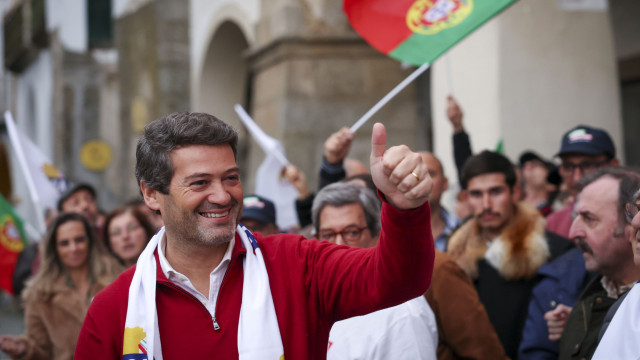
Meanwhile, André Ventura emphasized today the need to understand the criteria of “The Economist’s” classification and reminded that the country is also part of less favorable rankings: “Portugal is also in poor rankings for poverty among its elderly and pensioners, and ranks poorly in dependency on subsidies and state-dependence in the economy, bureaucracy levels.”
Ventura believes the government could leverage this ranking to change its economic outlook: “I wish the government would take this opportunity to view the economy as a service to people and not as an arithmetic of numbers or an Excel sheet to show the European Union,” he argued.
António José Seguro mentioned that the “dynamism of the labor market” was one of the reasons for the Portuguese economy’s recognition by “The Economist” and questioned “why there is a need” to change labor legislation.
“This is excellent news for our country when they recognize the vitality of our economy. But if you notice, one of the foundations of that recognition lies in the dynamism of the labor market we have in our country, and it’s another reason not to understand the necessity for the government to change labor laws,” he stated.

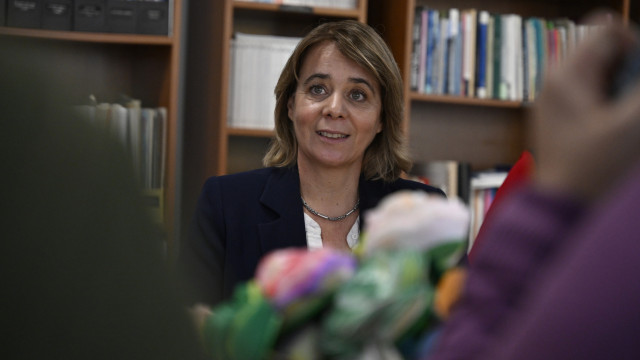
Finally, presidential candidate Catarina Martins stated that “there is no success” in an economy when “those who work cannot afford the house, the pharmacy, and the supermarket,” accusing the government of being “dazzled” by “The Economist’s” distinction.
“It’s necessary to see why they thought Portugal was the economy of the year. Some arguments are odd. One of the arguments is that the stock market is up. I’m sure no one in this country thought that if the stock market is up, everything is going well,” she pointed out.