
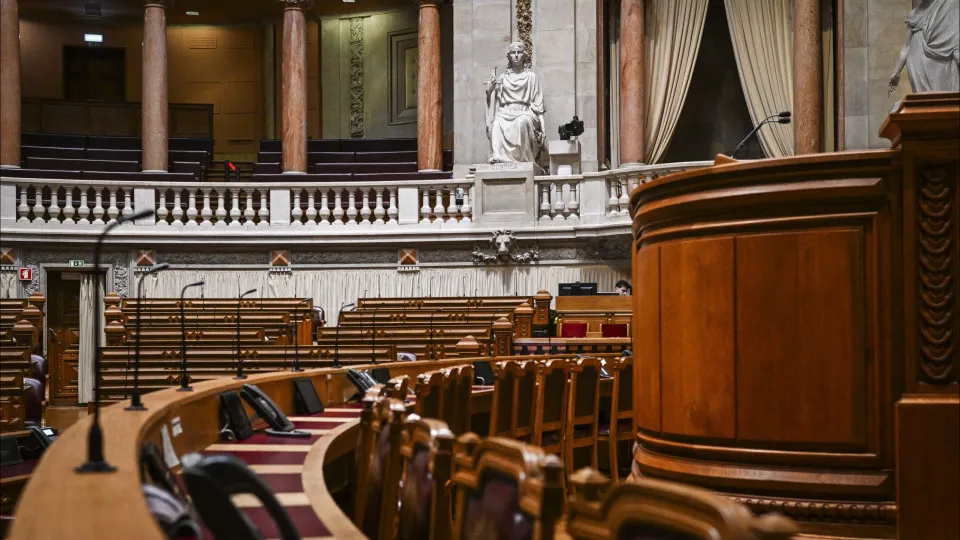
The plenary session today focused on discussing the legislative proposals from Chega and PAN, which intend to reinstate the prior approval by the Court of Auditors (TdC).
In presenting the request, Eduardo Teixeira (Chega) emphasized the need to restore the court’s “preventive role,” noting that the “inescapable delays” in the plan are rooted in state bureaucracy and its inaction.
The party calls for stronger control and a shift towards audit practices that emphasize “prevention rather than mere reaction.”
In contrast, Inês Sousa Real (PAN) remarked on the creation of a “gray area” where opacity has replaced verification.
According to the party, the beneficiaries of this lack of oversight are not “businesses, individuals, or public entities,” but those who “operate in the shadows” and view exceptions as an opportunity rather than a risk.
Miguel Rangel (IL) highlighted the “devastating impact” of bureaucratic burden in Portugal.
However, he warned that the nation persists in using “quick fixes” that divert attention from the necessity of structural reforms.
Patricia Gonçalves (Livre) stated that transparency and oversight are not obstacles but essential conditions for good governance.
“What hinders the state is not control, but a lack of administrative capacity […] and absence of planning,” she noted.
João Almeida of CDS clarified that the audit still exists, with only the prior approval removed in some instances.
He also pointed out the paradox of those advocating to combat bureaucracy while simultaneously suggesting that corruption be tackled with more bureaucracy.
Nuno Fazenda (PS) criticized the government’s decision to revise the Recovery and Resilience Plan without dialogue or respect for parliament, lamenting that many completed projects are not yet serving the public.
“Apartments in Vila Velha de Ródão ready since March. A continuous care unit in Leiria, unopened for seven months; or 10 homes in Grândola for urgent temporary housing, unopened for over a year,” he cited.
He stressed that European funds belong to the country, not the government, and the executive must not evade public scrutiny, reminding that the hearing of various PRR-related entities was approved today.
Dulcineia Moura (PSD) argued that the government’s concerns are not ideological but technical, reflecting the need to expedite the plan’s execution.
The deputy noted that when Luís Montenegro’s administration took office, they faced “an affront,” referring to an execution rate of around 20%.
Paula Santos (PCP) argued that Chega’s initiative is merely an attempt to cast doubts on public investment, reducing the issue of low public investment to the Court of Auditors’ approval.
“The much-vaunted bazooka was nothing but a damp squib, falling short of promises,” she added.
In closing the debate, Bernardo Pessanha (Chega) insisted that this concerns “one of the biggest blows to the credibility of the Portuguese state.”
He stated that simplifying procedures does not mean eliminating control mechanisms; thus, the executive “went too far.”
The PRR, scheduled for execution until 2026, aims to implement reforms and investments for economic growth recovery.
Aside from addressing COVID-19 impacts, this plan aims to support investments and generate employment.