


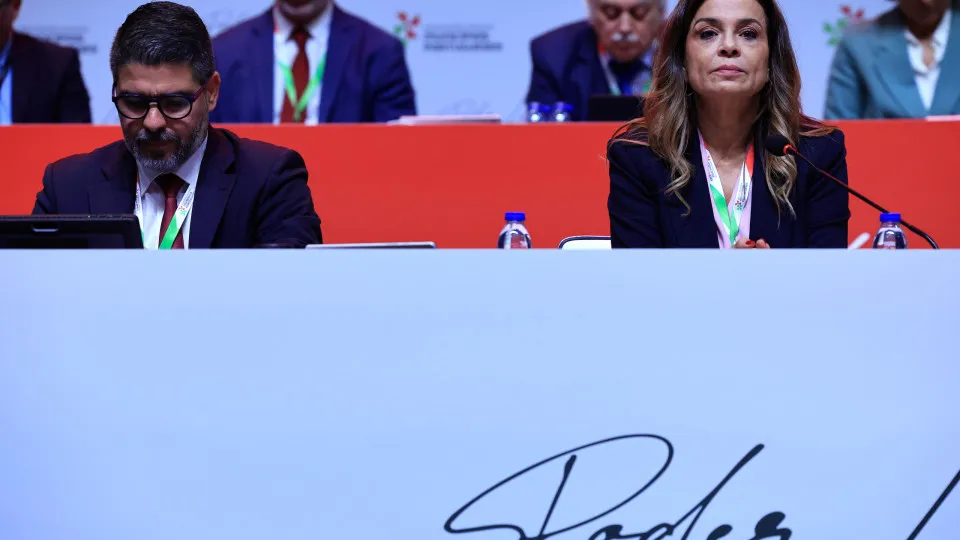
The document was approved this afternoon at the final stages of the XXVII Congress of the National Association of Portuguese Municipalities (ANMP), which gathered hundreds of mayors over the weekend in Viana do Castelo.
The resolution calls for priority measures for the 2025-2029 mandate, urging the Government to swiftly develop procedures for approving a new Local Finance Law to be effective in the 2027 State Budget.
Among other aspects, it should lead to convergence with the average resource-sharing levels of the Eurozone, address territorial asymmetries, and ensure stability, transparency, and simplification of local finance.
The resolution states that administrative decentralization is a crucial component of state reform and a fundamental tool for the nation’s social and economic transformation, enhancing territorial cohesion.
It highlights progress in the competence transfer process following agreements between the ANMP and the Government in education, health, and social action, resolving significant previously identified issues. However, it emphasizes the Government should effectively monitor with the revitalization of the Monitoring Committee, rectify what needs correction, and implement pending matters.
The municipalities stress the urgency to address key aspects not covered by the Program Escola funding notices, enabling inclusion of priority 3 schools and those subsequently added, ensuring continuous financing allocation.
The proposal calls for an advisory entity focused exclusively on local authorities and suggests revising the Local Elected Officials Statute to align officials’ working conditions with modern demands.
The reflection on the organization, management, and appreciation of Local Administration careers is deemed essential, noting that the rigidity of only three general careers combined with performance evaluation and career advancement constraints impedes talent attraction and retention in Public Administration.
The approved resolution advocates for municipalities’ active involvement in the design, governance, and management of community funds, ensuring responses to each territory’s priorities more swiftly and with less bureaucracy.
It urges the Government to reconsider the implementation of the Waste Management Rate (TGR), moderate its unsustainable level, and have the Environmental Fund directly return the full TGR amount paid by municipalities.
The delay in launching competitive procedures for low-voltage electricity concessions is deemed unacceptable, demanding the Government create the necessary conditions for this purpose.
It underscores the essential need for a comprehensive solution to the severe housing access problem with a review of current housing programs and other public policy execution tools in this area, accommodating a municipal financing model for housing.
The creation of administrative regions is also viewed as fundamental for advancing administrative decentralization, serving as a key instrument for national cohesion and integrated territorial development.