
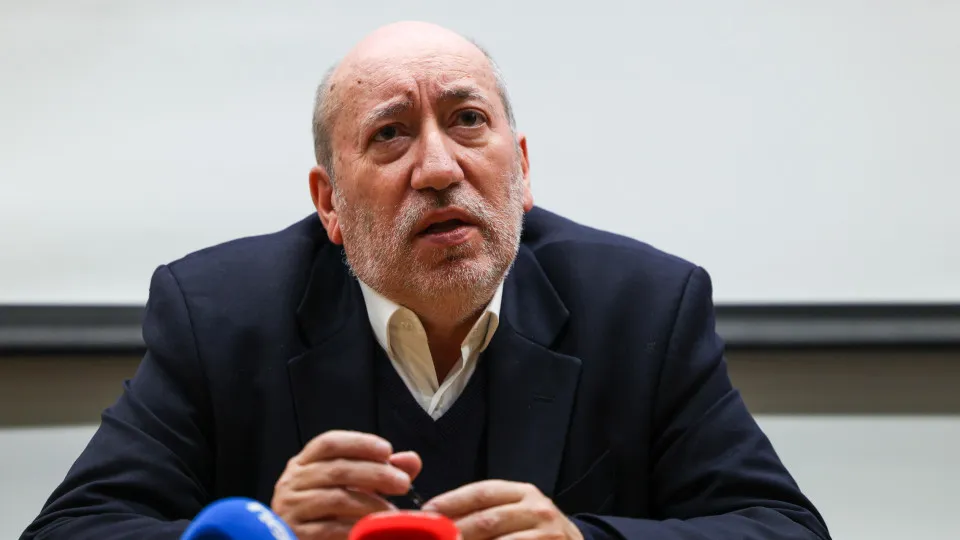
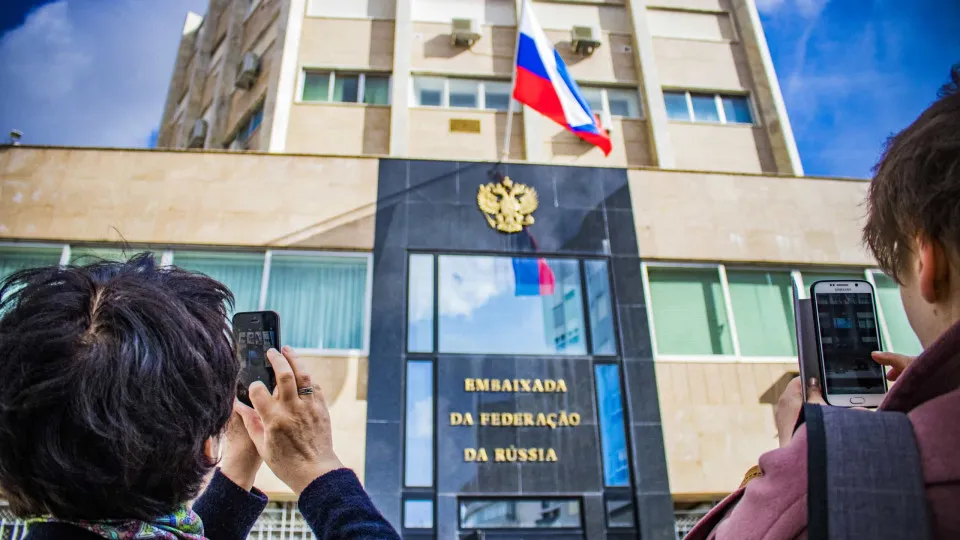
“It was Portugal that initiated the process of breaking ties by unconditionally supporting the EU’s [European Union] hybrid war against our country,” stated Aleksei Chekmarev, the press attaché of the Russian embassy in Portugal, in comments to the Lusa agency.
The representative was explaining the recent decision by Moscow to terminate a military cooperation agreement with Portugal, signed in 2000, while also revoking Defense agreements with France and Canada.
The decision was formalized through a decree issued by the Russian Prime Minister, Mikhail Mishustin, on Friday, as reported by the official Russian news agency TASS.
The agreement aimed to “promote cooperation between the parties in the military domain to deepen mutual trust and international security,” particularly through the exchange of opinions and information on politico-military issues, consultations on legal matters linked to the service and training of military personnel at institutions in each country.
According to the Russian embassy, there is currently no bilateral agreement in effect.
“The hostile actions of the Portuguese authorities have paralyzed our entire relationship system and also affected its legal framework,” emphasized the Russian official.
“None of the bilateral documents work now. Some were denounced by the Russian side, others by the Portuguese side, such as the cooperation and friendship protocol between the city of Moscow and the city of Lisbon, which had been in force since 1997,” he noted.
Aleksei Chekmarev was referring to a protocol whose termination was approved by the Lisbon Municipal Assembly in February last year, demanding the withdrawal of the Russian Federation’s army from Ukrainian territory.
The decision to terminate the military cooperation agreement “is not conjunctural in nature and was not motivated by recent events,” assured the press attaché, claiming it was an “‘evolution'” of bilateral relations in recent years.
Russia “reserves the right to determine the measures to be taken depending on the hostile policy of the Portuguese authorities,” said the diplomat, highlighting that “Russian-Portuguese relations are at the lowest level in their contemporary history.”
This week, Portugal supported a plan presented by the European Commission to channel to Kyiv revenues from about 235 billion euros of frozen Russian assets in the EU.
On Friday, the Russian ambassador to Germany, Serguei Nechayev, warned that the use of frozen Russian sovereign assets in Europe to finance Ukraine would have “considerable consequences” and considered that “any transaction with Russia’s sovereign assets without the country’s consent is theft.”
Ukraine has relied on financial and military aid from Western allies since Russia invaded the country on February 24, 2022.
Kyiv’s allies have also imposed sanctions on key sectors of the Russian economy to try to reduce Moscow’s ability to finance the war effort in Ukraine.
The Russian military offensive on Ukrainian territory has plunged Europe into what is considered the most severe security crisis since World War II.