
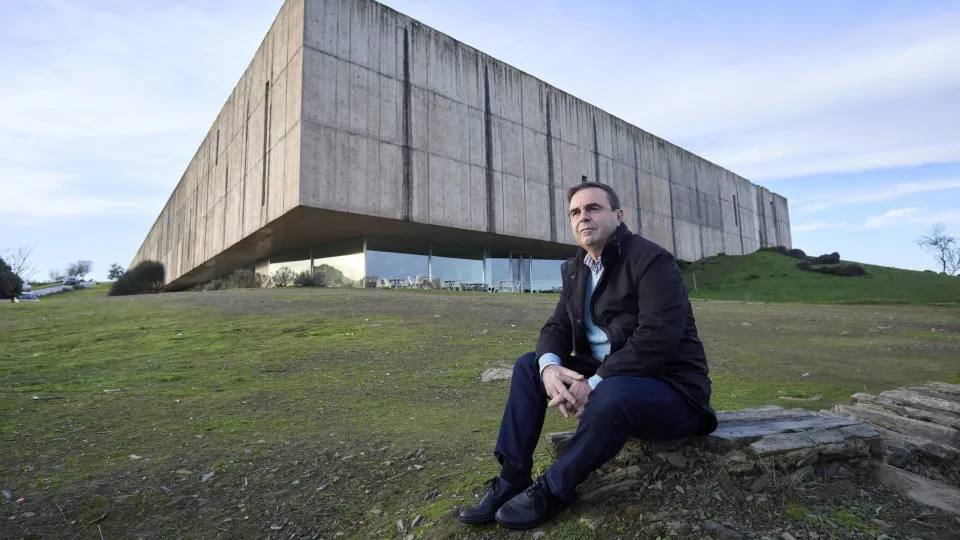
João Paulo Sousa, who took over as president of the Côa Park Foundation in September, revealed that he has been managing the institution for the past three months. Located in Vila Nova de Foz Côa, in the Guarda district, his objective is to optimize the organization and operations.
The president aims to enhance research, value human resources, promote heritage digitization, and maintain regular temporary exhibitions. One of the proposals includes the work of sculptor Alberto Carneiro. The strategy seeks to eliminate constraints, attract visitors, and enhance Côa’s national and international presence, with environmental sustainability being a key focus.
“When managing a foundation like this, understanding the statutes and the established management model is crucial,” Sousa commented. He identified constraints within the organization, where there was only a scientific coordinator, and aimed to streamline the process among the 40 employees, determining who was best suited to coordinate using available resources.
The new foundation president noted that efforts were made to utilize underused elements of the structure, focusing on applications for funding, including research programs totaling two million euros.
“I felt it was time to reorganize [this area] and have someone oversee applications. To ensure the foundation’s survival, creating new projects and expanding our reach is vital. We need better organization, with everyone contributing towards a unified direction. We have two million euros worth of applications to realize and must continue with ongoing ones.”
The projects associated with these applications involve programs like the Recovery and Resilience Plan (PRR), More Tourism, and grants from the Foundation for Science and Technology.
“Understanding the timelines and budgets of national components is crucial, requiring experienced coordinators, which is an advantage,” he stated.
By 2026, João Paulo Sousa sees a need for increased research funding to prevent the loss of human resources and support the cultural and scientific plans for Arte do Côa, emphasizing its significance beyond national borders.
Having defended the engravings and been a board member of the foundation, Sousa saw the Côa Valley’s fundamental missions: research, preservation, and heritage dissemination.
He highlighted the identification of over 17,000 engravings, stressing the need for detailed documentation, photographic recording, and 3D digitization to promote this heritage.
Seeking researchers is critical, as Sousa acknowledged, to fill existing gaps. “Recovering lost human resources is essential as we lost some highly skilled individuals,” he said, having already engaged with the institution’s founders and the Portuguese Association of Archaeologists.
Moreover, Sousa noted that sustainability efforts, particularly environmental ones, are fundamental to the foundation’s plans for the Côa Valley.
He cited the dilapidated condition of the vehicle fleet, untouched for over 30 years, as a problem for environmental pollution and safety. “My mission is to find a solution for renewing the vehicle fleet,” he stated, recognizing its urgency.
Regarding temporary exhibitions, the schedule is set until 2027, with applications to the Interreg program to seek partners and networking with the Portuguese Contemporary Art Network.
Temporary exhibitions are deemed crucial, especially in blending contemporary art with Côa’s art, but budgets are tight, Sousa explained.
While withholding details of the planned exhibitions until after the activity report’s release, Sousa highlighted a major exhibition of Alberto Carneiro’s work.
Current priorities include museum room refurbishment, 15 years post-inauguration, necessitating innovation to captivate visitors and maintain momentum.
On the Vale do Côa Archaeological Park’s Special Program (PEPA), Sousa noted its reactivation, following a recent joint ministry directive, with plans finishing within two years. It is crucial for strategizing this territory, he said.
Museum and park visitor numbers surged over the past 11 months, remaining around 70,000-75,000.
The impact extends to private operator visits and educational services like Ciência Viva. The foundation expects to surpass 127,000 visitors in 2024.
Combining all activities could push visitor numbers beyond 130,000 in 2025, Soto added.
Spanning 20,000 hectares, the Parque Arqueológico do Vale do Côa covers municipalities in Guarda and Bragança districts, with rock art displays.
This month marks the 27th anniversary of its UNESCO World Heritage classification.
The Côa Museum opened its doors on July 30, 2010.