


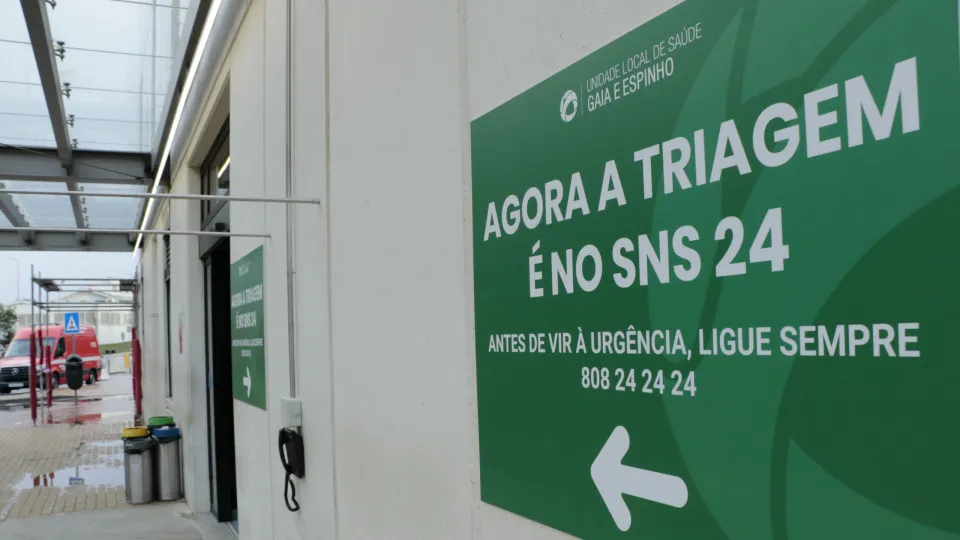
“Digital triage on mobile phones is already available,” announced Francisco Rocha Gonçalves during the parliamentary Health Committee meeting, where he was questioned by the PSD regarding the operation of the SNS 24 Hotline.
The Shared Services of the Ministry of Health (SPMS) revealed that this new triage for respiratory symptoms on the SNS 24 App is available for users aged 18 and over, allowing for an evaluation of acute symptoms and offering a referral to the most appropriate level of care.
This new digital process provides an initial “quick and safe” evaluation, according to the SPMS in a statement, offering three possible recommendations, one of which is for emergency situations where users are advised to immediately contact INEM by calling 112.
For less severe cases, the application suggests contacting the number provided in the digital triage to speak with a healthcare professional or, if available, scheduling a direct appointment at a health unit.
In non-severe cases, the recommendation is to perform and maintain specific care routines, SPMS indicated.
Regarding the winter plan currently in place, a peak time for calls due to respiratory infections, the Secretary of State informed lawmakers that 350 additional professionals have been added to the hotline, who will remain in this service.
Francisco Rocha Gonçalves also mentioned that the use of artificial intelligence will be “a process that will be humanized,” allowing the algorithm to suggest a course of action, but the final decision will be made by a nurse or doctor.
During the parliamentary session, the Secretary of State highlighted that in 2024, the Government adopted a series of “structural measures” to transform citizens’ access to healthcare, extending the “call before, save lives” project to 27 local health units.
“The decision was considered, and despite the inherent risks and natural growing pains, it proved to be the right one. The benefits for users, professionals, and the entire SNS are measured,” assured Francisco Rocha Gonçalves, admitting that this evolution increased pressure on the hotline.
“We recognize there was a lag between decision-making, implementation, and the full realization of results, but we believe that access constraints to the SNS 24 line are now overcome,” he emphasized.
“This is not a leap of faith, but the careful observation of reports and indicators,” the official added, noting that the call handling rate is at 93% with an average wait time of two and a half minutes.
Among the implemented measures, he highlighted the increase in the pool of professionals to 3,700, compared to 1,600 two years ago, to meet the growing number of contacts, which has risen from 3.5 million to 5.2 million calls.
“People have trusted the line, which, in turn, has become a victim of its own success over these months, compelling us to work with renewed effort,” Francisco Rocha Gonçalves stated.