
Ten years ago, an official remarked on the Paris Agreement on climate, labeling it important yet just the beginning of a process. He cautiously stated that the Agreement would lead to a 3ºC increase in temperatures by 2100, a figure he maintains today.
Currently, with each country’s contributions toward reducing greenhouse gas emissions (GHGs), temperatures are expected to reach 2.7ºC or 2.8ºC. However, the reduction of GHGs by poorer countries is dependent on assistance from developed countries, which may result in a higher increase, he explained.
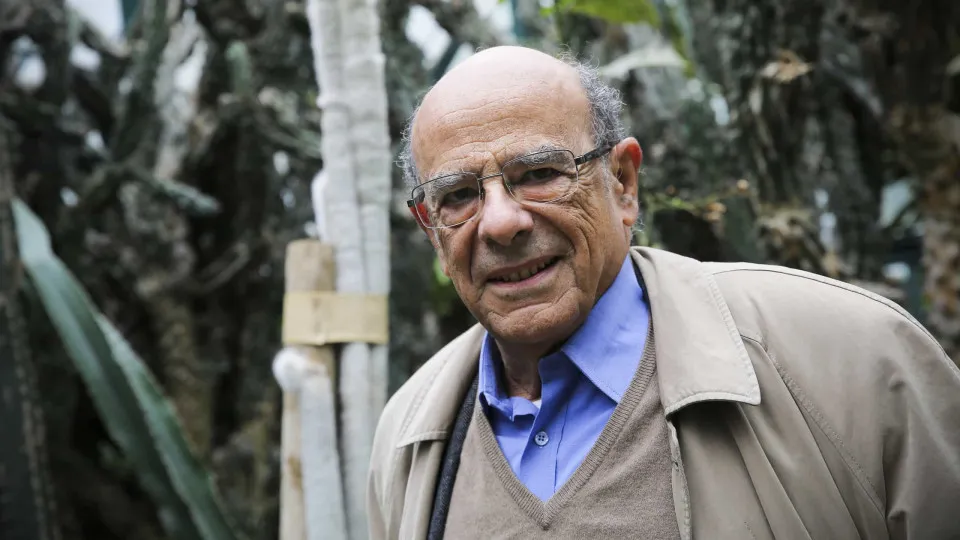
There are additional factors at play. Filipe Duarte Santos, a geophysicist, university professor, and president of the National Council for the Environment and Sustainable Development (CNADS), discussed the positive feedback loop in the climate system, where an initial human-induced change is amplified by the system itself.
Santos illustrated this with the example of Arctic ice, which reflects less heat as it reduces due to global warming. This increased heat absorption by the ocean leads to further ice melting. “It amplifies the rise in temperatures,” he stated.
“It’s possible and likely that the warming is occurring faster than predicted in IPCC (Intergovernmental Panel on Climate Change) reports,” he asserted in his interview.
A decade ago, Santos had already indicated that maintaining temperature increases at less than 1.5ºC above pre-industrial levels was no longer possible, nor below 2ºC.
“I continue to hold the same view,” he noted, acknowledging the significance of the Paris Agreement, signed by nearly every nation in 2015 with the chief aim of curbing major temperature spikes due to fossil fuel consumption.
“The agreement was also beneficial in the sense that without it, the current situation would be worse,” he considered.
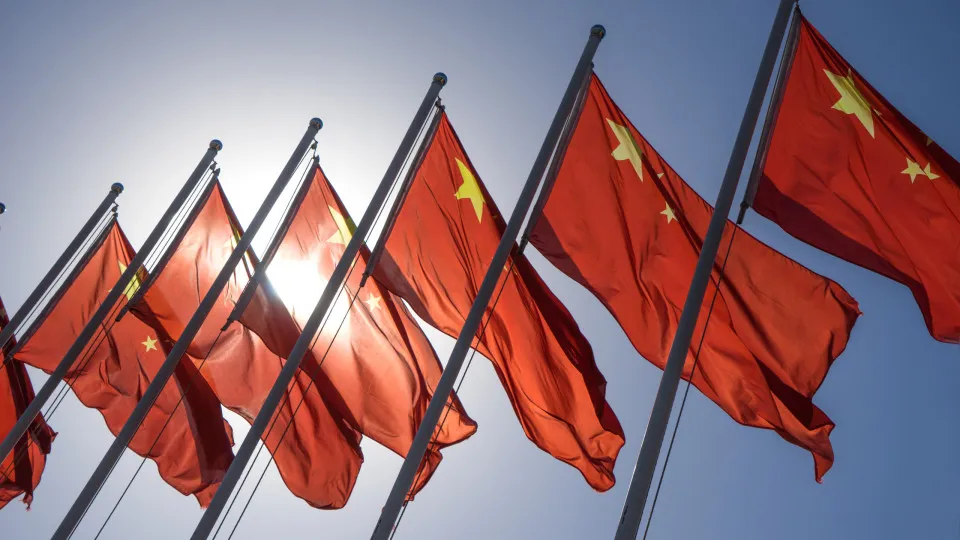
Santos pointed out positive strides some countries have made in reducing GHGs but also noted changes over the past decade, such as a complex geopolitical situation, with the United States investing in fossil fuels while China moves toward renewable energies.
However, he emphasized another change since the Paris Agreement: the soaring energy demand. Global energy consumption surged by 50% from 2000 to 2024, he explained, due to “a civilizational model based on intensive energy consumption.”
As countries develop, they consume more energy, a situation that applies to 80% of countries. Furthermore, the digitalization process and artificial intelligence are also major energy consumers in the Western world.
Thus, he cited Czech-Canadian scientist and political analyst Václav Smil, who claimed the world is not in an energy transition but in an “energy addition.” Although renewables now constitute 15% of primary energy sources, “this growth is insufficient to meet rising demands.”
He recalled some nations reverting to nuclear energy and highlighted China’s investment in thorium-powered plants (similar to uranium but previously overlooked because uranium was used in atomic bombs), whose reactors don’t require water for cooling and lack uranium’s risks.
Ten years ago, Santos commented to Lusa regarding the Paris Agreement: “It’s expected to be a very clear signal for businesses, especially in the energy sector, to genuinely commit to an energy transition, utilizing fewer fossil fuels, like coal, oil, and natural gas, and more renewable energies.”