


“We neither comprehend nor accept that the CTI completely ignored the INEM professionals, disregarding their representative structures that hold irreplaceable technical and operational knowledge. Such omission reveals a lack of institutional respect and undermines the legitimacy of the presented conclusions,” stated the Workers’ Commission in a communiqué.
The CTI’s proposals for the reformation of INEM, publicized by the newspaper Público, include the creation of a single central helpline merging CODU and SNS24, and the opening of non-urgent patient transport to the private sector.
According to the INEM Workers’ Commission, the CTI’s proposals are based on assertions that “do not reflect the reality of the Integrated Medical Emergency System (SIEM) nor the work of its professionals.”
“The system does not start from scratch. The coordination between CODU and SNS24 has existed for years, with operational protocols and call transfers that naturally require modernization and strengthening,” explained the INEM workers’ representative body.
Regarding the proposal for a single center with SNS24, the workers believe it is based on “erroneous premises,” primarily because “a large majority” of SNS24 nurses work remotely, refuting the concept of “physical proximity of teams” proposed as a basis for the central merger.
“Without guaranteed infrastructures and physical presence, the proposal is unfeasible,” emphasized the INEM Workers’ Commission, noting that the Medical Association publicly criticized the SNS24 line, indicating that the service is not functioning well, making it “imprudent” to propose centralizing the helpline without addressing structural deficiencies.
INEM workers agree that Pre-Hospital Emergency Technicians (TEPH) have been “underutilized resources” within the National Health Service (SNS), but they reject the claim that “they cannot do anything,” labeling it “technically false and deeply offensive.” They caution that any structural change placing TEPH under third-party entities without ensuring integrated clinical command, a consolidated career, and territorial equity “poses a serious risk to the effectiveness of SIEM.”
Concerning integration with Local Health Units (ULS), INEM workers underscore that this proposal is already implemented in daily operations, as, for instance, Immediate Life Support (SIV) ambulances are in the majority of legally designated locations since 2016, operated by ULS nurses in coordination with INEM.
Regarding the model for Medical Emergency and Resuscitation Vehicles (VMER), the INEM Workers’ Commission states, “clinical integration is not a new proposal, rather a practice in place for decades,” and considers the addition of another team member to the VMER teams “without any demonstrated qualitative gain” to be “a management error.”
“What is needed is not a paradigm shift — it is the consolidation with investment, clarity of responsibilities, and strong national coordination,” they argue.
Regarding non-emergent transport, the workers point out that hiring private operators has been implemented for years, complementing the work of fire departments and the Red Cross.
Comparing with other international medical emergency models, INEM workers lament that CTI visited only Denmark and France: “Ignoring other consolidated European models with different architectures and professional frameworks leads to inadequately supported conclusions to justify structural reforms in SIEM.”
Awaiting the full report publication from CTI for a more thorough analysis, the INEM Workers’ Commission assures that it will remain “proactive and firm” in defending the quality of rescue, public interest, and workers’ rights.
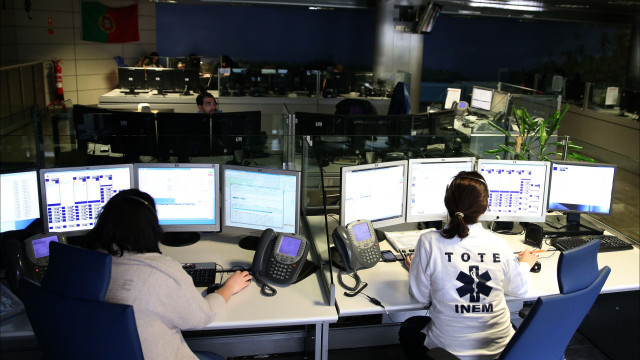
The Independent Technical Commission (CTI) for the reformation of INEM proposes the creation of a single central helpline merging CODU and SNS24, and the opening of non-urgent patient transport to the private sector, as reported by the newspaper Público.
Lusa | 08:19 – 06/12/2025