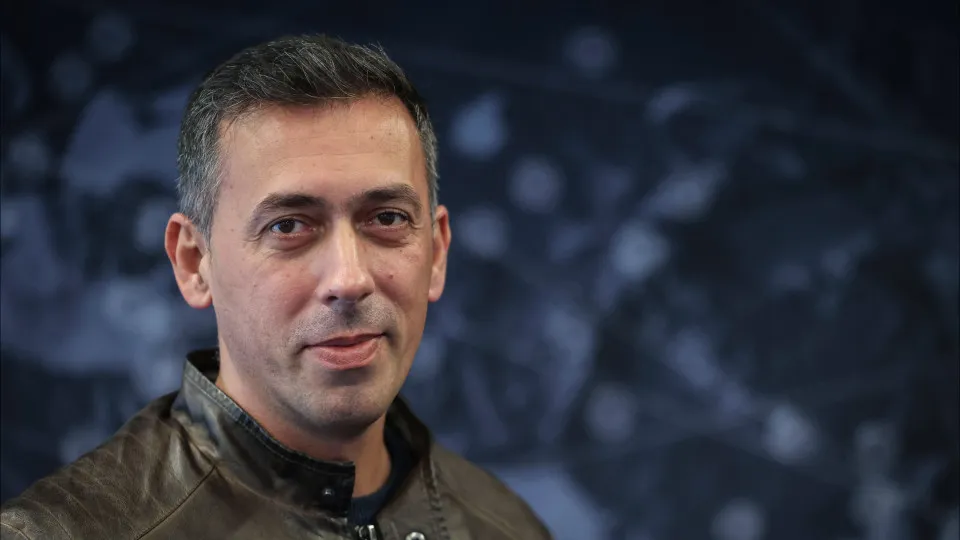
“Certain sectors, due to their size and the areas they impact, will feel a greater impact,” stated the general secretary of CGTP in an interview, discussing the general strike called for December 11, highlighting health, education, and transport as examples.
Tiago Oliveira also noted that the strike covers both public and private sectors, expressing confidence that workers in the private sector “will demonstrate their strong participation.”
The general strike was announced in response to the draft labor law revision presented by the Government and aligns with the UGT, marking the first joint strike by the two trade union centers since June 2013.
When asked if unions associated with CGTP would comply with the minimum service requirements that will be declared, Tiago Oliveira was clear: “Minimum services must be respected and will always be respected,” he assured, adding that under the current law, the declared minimum services “already exceed the normal functioning of institutions.”
Oliveira further criticized the Government’s intention to expand the sectors covered by minimum services in the event of a strike, asserting that the current Labor Code already provides “the necessary mechanisms” for sectors where “they are essential,” citing health as an example.
“What this Government is doing is attacking the right to strike,” argued Tiago Oliveira, criticizing the executive’s intention to extend minimum services to areas such as childcare, elderly and disability care, private security of essential goods or equipment, and food supply.
“Even today, we do not understand what the Government means when it includes the food sector as an indispensable social need,” he pointed out.
The CGTP general secretary indicated that the decision for a general strike was gradually reached, following two demonstrations on September 20 in Lisbon and Porto, and another national protest on November 8, culminating in this “journey of struggle.”
Although Oliveira mentioned that “the Government controls the schedule,” particularly regarding when it will submit the labor law revision proposal to parliament, he emphasized CGTP’s perception that “after November 27” (the date for the final global vote on the State Budget for 2026), “the Government had a clear path to bring its proposal to the Assembly of the Republic” at any moment.
And if “the fight is on, then we will fight now, while the document is under social consultation,” he added.
Following comments from Labor Minister Rosário Palma Ramalho expressing hope that complying with minimum services would make civil requisition unnecessary, and Infrastructure Minister Miguel Pinto Luz’s statement that the government will try to minimize the general strike’s effects, the general secretary of CGTP emphasized it was “important” for the Government to “be concerned with the reasons for the strike” instead of “being worried” about its effects.
Confident in what he predicts will be “a major general strike,” Tiago Oliveira assured that if the strike does not meet expectations, it will not weaken the bargaining position of CGTP and UGT, as “those who will strike are not union A or union B, but the workers.”