
“The announcement of this strike has brought to public discussion the Government’s intentions with the draft changes to labor legislation. There is a strong desire to prevent these measures from advancing,” stated Cristina Torres, president of the National Union of Workers of Local and Regional Administration (STAL).
The union leader mentioned that during meetings held with local administration workers, “the dissatisfaction regarding current working conditions and those envisaged in the Government’s ‘labor package’ was made clear.”
“Today’s legislation is already a disaster, and it will only worsen. Workers understand what is at stake and remember, many from the time of the ‘troika’ and all the wrongs done,” she pointed out.
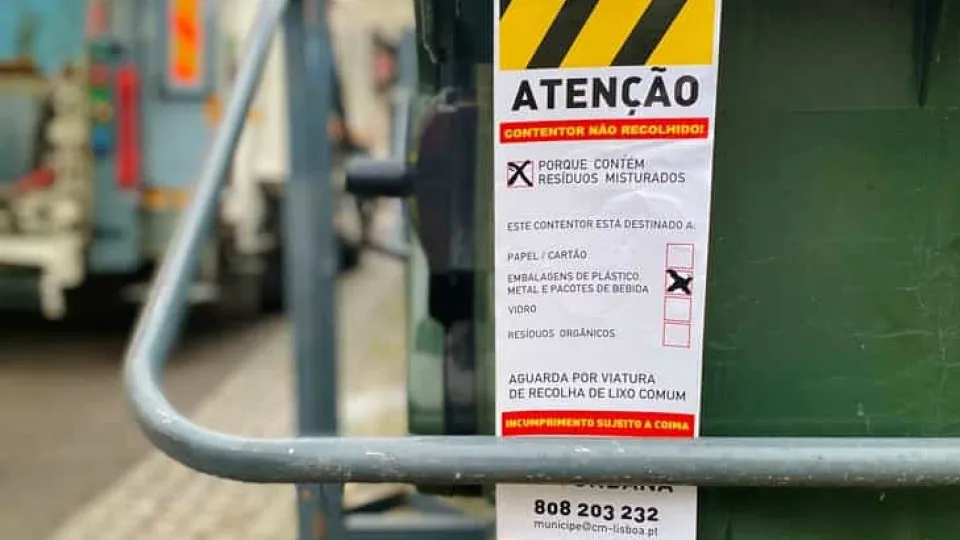
Regarding sectors most affected by this strike, Cristina Torres highlighted waste collection, schools, transportation under municipal responsibility, and various municipal facilities such as pools, museums, sports halls, and libraries.
The STAL president stated that waste collection will be the first service to feel the effects of the strike, starting with the urban hygiene shift in Évora, from 7:00 PM on Wednesday.
The impact will extend in the following hours to several municipalities, including Sintra, Amadora, Almada, Loures, and Vila Franca de Xira.
“It is possible to live better, with dignity. It is possible to have better wages, better hours, but for that, workers need to be united and fight for it,” she urged.
Also speaking, Nuno Almeida, president of the Lisbon Municipality Workers Union (STML), underscored the significance of this strike in “halting the Government’s labor package,” anticipating that the urban hygiene sector will be most affected.
“Here in the Lisbon city council, it will certainly have a strong impact on waste collection, as well as other public services in the city,” he noted.
Nuno Almeida also predicted a “strong impact” on schools, particularly kindergartens managed by the municipality and parish councils, and indicated potential closures of cultural facilities, disruptions at service points, and failures in municipal company services.
However, the STML president noted that minimum services will be ensured in essential sectors such as urban hygiene, cemeteries, sanitation, and civil protection, particularly by the Fire Brigade Regiment.
“There will be a set of services that firefighter workers will not provide during the general strike, but it is clear that emergency aid, which is one of the safeguards that our minimum services have always adhered to, will not be compromised,” he assured.
Nuno Almeida recalled that this will be the 11th general strike in 50 years of democracy, calling it “historic” due to the political moment and the level of opposition to labor changes.
“The Government presents a set of amendments with an ideological load where the balance between workers and employers suffers a major imbalance. It will always be historic because if the Government proceeds with its intentions, labor relations will affect not only municipal workers but workers across the country,” he warned.
The general strike on December 11 was called by the CGTP and the UGT against the proposed revision of the Labor Code and will be the first joint stop by both centrals since June 2013, when Portugal was under ‘troika’ intervention.