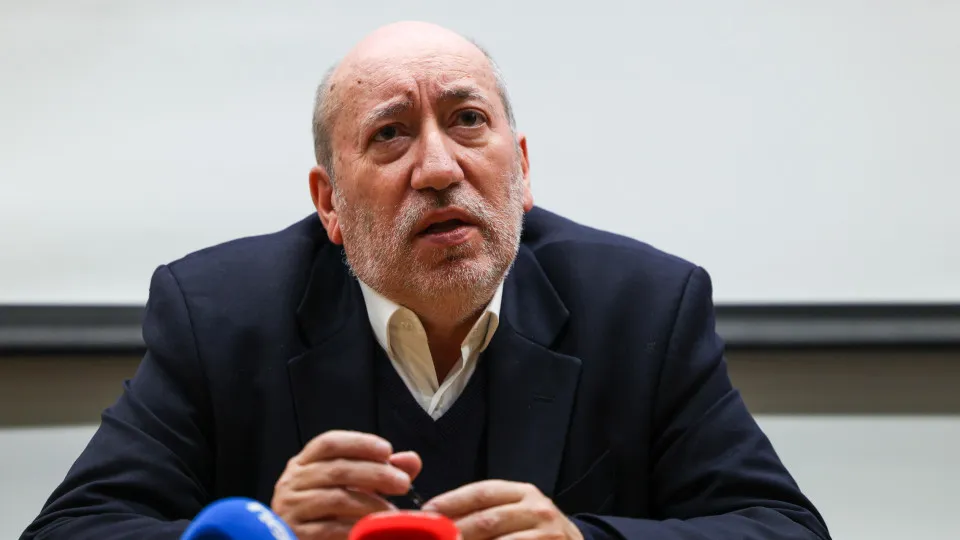

“Following our meeting with workers last Friday, where we discussed the risks associated with the approval of the labor package, we have high expectations for participation in the Alentejo region,” stated Bruno Pires, a spokesperson for STRUP, to the Lusa agency.
The same trade unionist, who coordinates Setúbal’s delegation and covers the Alentejo districts of Évora, Beja, and Portalegre, noted that “the impact of the general strike will be visible.”
“We have high expectations for the Beja district. Évora is more challenging due to different circumstances, but for Portalegre, we also have high expectations,” he added.
For drivers, the most impactful proposals in the Government’s labor package are “individual time banks” and “the possibility of dismissal without just cause by companies,” claimed the union leader.
Bruno Pires argued, “If approved, these factors will lead to very low base salaries for drivers and losses in wages.”
According to the STRUP official, “With a shortage of drivers in public services, drivers often work extra hours. Companies might then use individual time banks to send workers home as if they were on vacation when there is less demand.”
Bruno Pires explained that in the Alentejo region, the collective road transport service was concessions granted by inter-municipal communities to Rodoviária do Alentejo, resulting in the formation of various companies.
“However, almost all drivers belong to Rodoviária do Alentejo and are only loaned to these companies,” he noted, expressing hope that “urban” drivers, present in district capitals and those from inter-municipal companies, will join the strike.
Services “are mostly covered by a single driver,” and if they do not start in the morning, the line will not operate, resulting in no connections with other lines, he predicted, while acknowledging that for Rede Expressos, “a high participation in the general strike is much more challenging.”
Lusa attempted to obtain clarification from Rodoviária do Alentejo regarding the general strike and whether minimum services will be decreed, but the company could not be reached by phone and did not respond to the email sent by the evening.
The Intermunicipal Community of Central Alentejo (CIMAC) and the Évora City Hall clarified to Lusa that they hold transport concession contracts with Rodoviária do Alentejo, providing only a supervisory role in contract compliance, not management.
A source from the Intermunicipal Community of Alto Alentejo (CIMAA) also told Lusa that the transportation concession is with Rodoviária do Alentejo and, as of today, the company has not informed local mayors whether minimum services will be decreed.
The mayor of Beja, Nuno Palma Ferro, told Lusa that, so far, “absolutely nothing has been arranged” and the municipality has not requested minimum services for urban transport, having no “expectations regarding participation” in the general strike.
The general strike on Thursday against the Government’s draft labor legislation reform will be the first to unite the two main trade union confederations, CGTP and UGT, since June 2013, when Portugal was under ‘troika’ intervention.
The proposed government reforms in labor legislation cover various areas, such as parenthood, dismissals, extending contract terms, and sectors that will be required to provide minimum services in the event of a strike.
RRL/HYT/ASYS/SM // MCL
Lusa/Fim