

On May 8, the Regional Coordination and Development Commission of the North (CCDR-N) announced financial incentives described as “monetary, temporary, and gradual,” available to former refinery workers who lost their jobs due to the closure. Workers have until June 30 to apply.
The CCDR-N clarified that these incentives are part of the Territorial Plan for a Just Transition in Matosinhos, intended to support ex-workers affected by the closure of the Petrogal refinery in Matosinhos.
The coordination and control committee (CCT) highlighted that the government allocated one million euros to assist workers earning less than they did in 2020, mirroring a previous government initiative during last year’s election campaign, which excluded many workers, a situation also criticized by the committee.
The committee’s statement emphasizes, “Despite the demolition of the refinery, the crime persists, resisting the corrosive sea air which, despite being relentless, damages less than the incompetence of successive governments.”
The CCT further criticized political parties, noting, “The same parties, PS with the collusion of PSD, and others in their electoral games, have contributed over the years to the country’s deindustrialization, with severe social and economic consequences.”
Compensations to workers are “too late and try to rectify an irreparable injustice — the destruction of jobs,” the statement notes, highlighting the urgent need for solutions by the government resulting from Sunday’s elections.
The CCT recalls the “blackout” at the end of April to demonstrate “the incompetence of the governors that afflicted the Portuguese and revealed the country’s fragility” concerning “vital topics like energy sovereignty and supply security.”
In this context, the commission seeks the “reinstatement of all dismissed workers from the Porto Refinery,” stressing the facility’s crucial role in the national supply and distribution network, particularly in the north of the country.
The commission also expressed that the refinery “stored strategic fuel reserves, and its closure drastically changed the profile of reserves.” Currently, these are maintained outside national territory, with a significant increase (from 28% to 43%).
This, combined with the “increased national consumption of petroleum products… has further pressured liquid fuel reserves compared to 2019,” contrary to the rationale used to justify the facility’s closure.
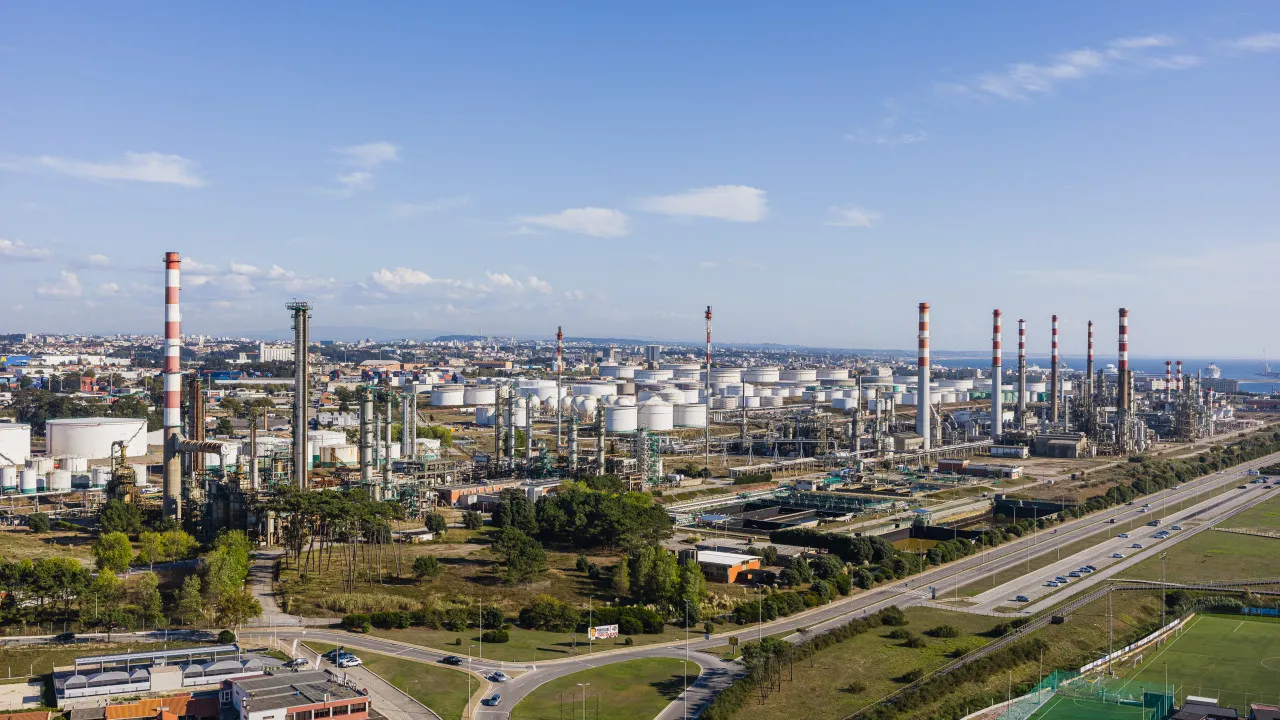
The CCT underscores the importance of using the refinery’s land within a national strategic energy plan. The refinery in Leça da Palmeira, Matosinhos, Porto district, remains “fundamental for securing/resuming production of the country’s fuel, lubricants, asphalts, and all chemical products produced there to boost the country’s reindustrialization.”
Galp announced the refinery’s closure in December 2020, with completion the following year, a move heavily criticized by trade unions. In May 2021, Galp initiated a collective dismissal of about 150 refinery workers, reaching agreements with 40% of approximately 400 workers.
The site is set to host a telecommunications and computational perception lab focused on research, innovation, and incubation in communications, wireless technologies, networks and applications, computer vision, sensing technologies, computing, and machine learning.