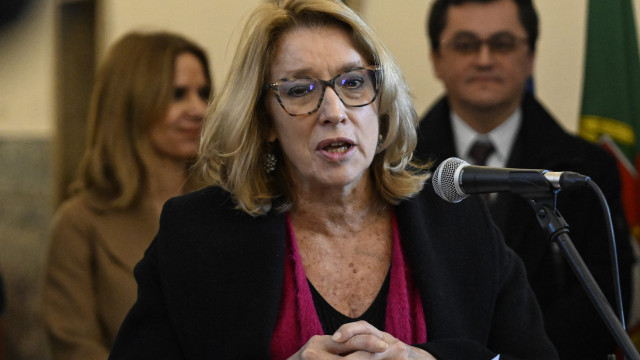


The President of the Regional Union of Private Institutions of Social Solidarity of the Azores (URIPSSA), João Canedo, stated today after a meeting with the President of the Regional Government, José Manuel Bolieiro, that the situation arises because the Republic’s Government has not yet transferred the total amount of 7.8 million euros intended for the region’s institutions.
“The Minister of Labor, who should have transferred the funds that were allocated to the Private Institutions of Social Solidarity [IPSS] on the mainland, has not transferred them to the Autonomous Region of the Azores, to the ISSA [Azores Social Security Institute],” he explained.
João Canedo pointed out that, currently, the institutions “are facing great sustainability and management difficulties” due to not receiving these funds.
He added that there are institutions that have not yet been able to pay the Christmas bonus to workers, while others “say that, come January, with the increase of the minimum wage, they will not be able to afford this expense, and URIPSSA’s concern is to receive this money to effectively cover the real costs that the institutions have.”
In today’s meeting with the leader of the PSD/CDS-PP/PPM coalition Regional Government, José Manuel Bolieiro, URIPSSA aimed to raise awareness of the government about the situation and the problems that might arise in 2026 if the financial sustainability issue of the institutions is not resolved.
José Manuel Bolieiro stated that the government is a partner of the IPSS in a struggle that must be developed jointly “in the face of insensitivity and ignorance of the reality” of the Azorean institutions.
“Without a comprehensive understanding between Social Security, the National Institute of Social Solidarity, and the understanding of our cooperation agreements in the Azores, through the Institute of Social Solidarity, there could be an even more serious problem than currently exists,” he warned.
He continued: “The main conclusion of our meeting was to work together with this assertion position in light of the understanding that the Republic, Social Security, and the Institute of Social Solidarity must have regarding the specifics of the Azores.”
“As for commitments that fall under the region’s responsibility, beyond the efforts made by myself, the Regional Secretary of Health and Social Security, and the administration of the Institute of Social Solidarity, which we have been undertaking all these years and in recent months with increased intensity, we are now looking at revisiting and also [being] available to collaborate on a revision of the Social Action Code in the Azores,” he added.
Bolieiro mentioned that it is still necessary to clarify with the Republic the existing cooperation agreements in the region, “concerning the average that occurs on the mainland.”
“The responsibility of the Republic’s Government is for the Republic, and it must understand the differences of the mainland, the Azores, and Madeira. It is not acceptable that it wants to establish an average based on what the mainland reality is. This is a struggle we must face together, justifying precisely the terms that the cooperation agreements with the Azores Social Solidarity Institute have with our IPSS,” he argued.
As a result, the President of the Azores Regional Government stated: “This is the work we will develop, which is exclusively within the region’s domain, which is a visit to the Social Action Code and work to substantiate together with the Republic what the specificities of the Azores are.”