
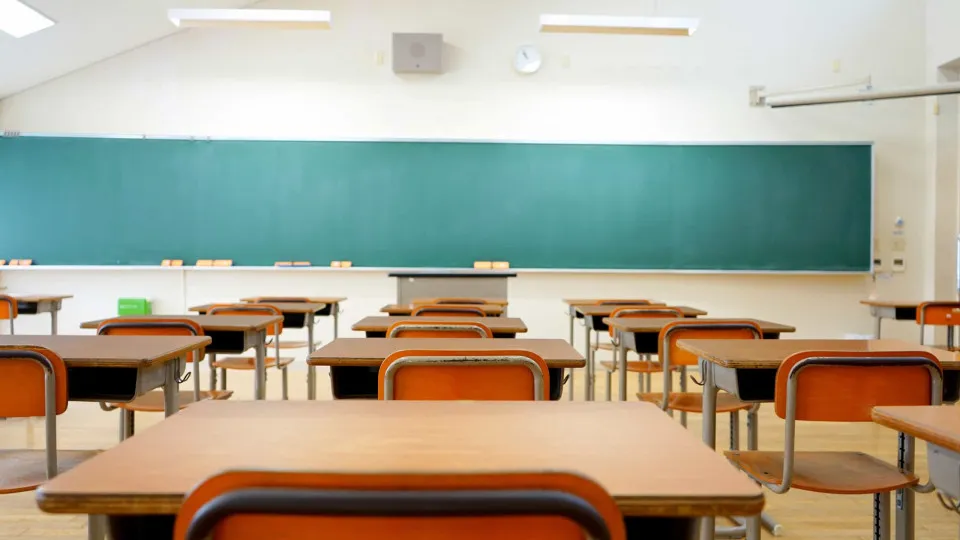
The Federation of Portuguese Teachers (Fenprof) conducted its annual survey among school directors on the conditions of special education, revealing deteriorating support for students due to a shortage of professionals.
Approximately eight in ten directors reported a shortage of special education teachers, specialized professionals, and operational assistants, while also noting an increasing number of students requiring support.
Out of a total of 15,437 students, most receive direct support, but 9.1% receive only “indirect support,” according to the survey, with responses from 147 school directors and group leaders.
The shortage of special education teachers has led these educators to provide guidance to class teachers on how to work with these students.
“There are more students in schools, more with specific needs, but no human resources to work with them, resulting in indirect support. Often, these teachers, therapists, or psychologists do not even know the students,” emphasized Ana Simões, Fenprof’s national coordinator for special education, during the presentation of the survey results.
Compared to last year’s survey, there are now more students receiving only “indirect support”: in 2024, it was 4.4% and now stands at 9.1%.
Directors attribute this increase to more students needing specific support and fewer teachers available.
“Directors continue to assert that they do not have the necessary resources to ensure inclusive education in schools. There is no inclusion in schools,” stated Ana Simões.
This year, 74.3% of schools and groups reported a lack of special education teachers, up from 64% last year.
Most schools also reported a shortage of specialized professionals and operational assistants.
The issue is also highlighted by the Portuguese Association for the Disabled. Vice President Helena Rato criticized the lack of resources, noting that school dropout rates are increasing, with disadvantaged families being the most affected.
When public schools cannot support families with children with special educational needs, “the government resorts to the special education subsidy, but the value of this subsidy is woefully insufficient,” criticized Helena Rato, explaining that support amounts to around 300 euros.
She stated, “Parents who can afford to fill the gap can place their children in private education; the others, unfortunately, stay at home,” during a press conference held today in Lisbon.
On International Day of Persons with Disabilities, Helena Rato also highlighted the challenges faced by young people after completing compulsory schooling: “The situation is so dire that in Barcelos, a father of a student in such circumstances went on a hunger strike due to a complete lack of support for these individuals.”