


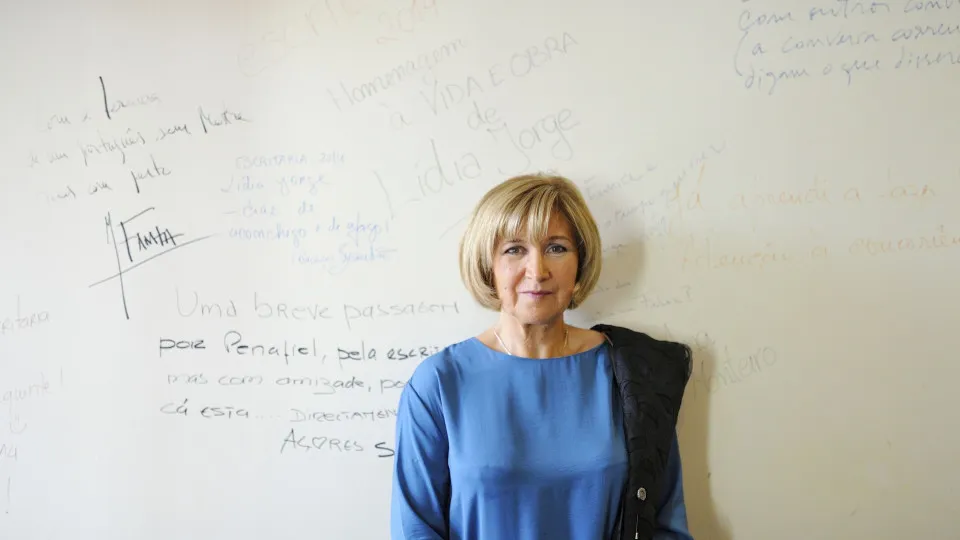
The Rector of the Azorean academy, Susana Mira Leal, recognizes “the undeniable and essential contribution” of the author to Portuguese literature and her “international projection for Lusophone culture.”
The novelist, poet, and essayist, whose works have been translated into over twenty languages, is considered by the Rector as one of the “most influential voices of the post-April 25th period,” having “truly renewed Portuguese novel writing” and addressed themes such as democracy, the female condition, colonialism, historical violence, and memory, among others.
Beyond this, Susana Mira Leal emphasizes that in the context of her work, Lídia Jorge “focuses on issues of great relevance to the Azores,” as she “extensively explores the issue of insular geographies, peripheries, identity, isolation, and resistance,” alongside “the relationship of people with the territory.”
“These themes relate to our insular uniqueness, our peripheral and ultra-peripheral circumstances. This is also a fundamental reason for distinguishing Lídia Jorge; her work’s critical and symbolic resonance,” states the Rector of the Azorean academy.
Susana Mira Leal highlights the Algarvian writer’s role in defending “fundamental values such as democracy and combating hate speech, adopting an ethical and civic stance in defense of humanistic values,” with which the University of the Azores “completely identifies,” forming part of its “identity matrix.”
The award ceremony will take place on Wednesday at the Aula Magna of the University of the Azores, at the Ponta Delgada campus, beginning with an academic procession from the Rector’s building, followed by the investiture ceremony and tribute speech by the honoree’s sponsor, Ana Cristina Gil, associate professor at the Faculty of Social and Human Sciences of the UAc.
Lídia Jorge made her debut in 1980 with the novel “O Dia dos Prodígios.”
She is also the author of novels such as “O Cais das Merendas” (1982), “Notícia da Cidade Silvestre” (1984), “A Última Dona” (1992), “O Jardim Sem Limites” (1995), “O Vale da Paixão” (1998), “O Vento Assobiando nas Gruas” (2002), “Combateremos a Sombra” (2007), “A Noite das Mulheres Cantoras” (2011), “Os Memoráveis” (2014), and “Estuário – 2018.”
She has been honored with numerous awards, including the Tributo de Consagração Fundação Inês de Castro Award (2019/2020), the Grande Prémio de Literatura dst (2019), the Prémio Vergílio Ferreira (2015) from the University of Évora, the Luso-Spanish Culture Award (2014), the International Literature Prize of the Günter Grass Foundation (2006), the Grande Prémio de Romance da Associação Portuguesa de Escritores, the Prémio Correntes d’Escritas (2002), the Jean Monet Prize for European Literature (2000), and the D. Diniz Prize from Casa de Mateus (1998), among others.